Your Portfolio is Your Business Card: How to Build a Killer Tattoo & Piercing Collection
Master the art of portfolio creation. Learn how to photograph, curate, and showcase your best tattoo and piercing work to attract your ideal clients.
4 min read

Your Portfolio Isn't Just a Gallery—It's Your Strongest Sales Pitch
Hey everyone, Daniel here. In my world of fades and sharp lines, the proof is in the final cut. Before a client ever sits in my chair, they’ve likely seen my work online or in my shop’s lookbook. The same exact principle, magnified tenfold, applies to you in the tattoo and piercing world. Your portfolio is your handshake, your resume, and your business card all rolled into one. It’s the single most powerful tool you have for attracting not just any clients, but the right clients—the ones who seek out your specific style and are willing to pay for your expertise.
A scattered Instagram feed or a dusty binder of faded photos just won’t cut it anymore. A strong portfolio is a curated, strategic collection that tells a story about your skill, your artistic vision, and your professionalism. Whether you’re a seasoned artist looking to refine your brand or an apprentice just starting out, building a killer portfolio is the cornerstone of a successful career. Let’s break down how to build one that works as hard as you do.
Step 1: Curate with Intent – Quality Over Quantity
The first rule of portfolio building is to ditch the idea that you need to show everything you’ve ever done. Your portfolio should not be a chronological dump of your work; it should be a highlight reel. Every single piece should serve a purpose.
Ask yourself these questions for every piece you consider including:
- Is this technically excellent? Look for clean lines, smooth shading, solid color packing, or perfect piercing placement. Be your own harshest critic.
- Does this represent the work I want to do more of? If you’re tired of doing infinity symbols, don’t feature them. If you want to specialize in large-scale Japanese work or intricate ear curations, make sure your portfolio is filled with stellar examples of that style. You attract what you show.
- Is the photo high-quality? This is non-negotiable. A blurry, poorly lit photo of a masterpiece will make the work look mediocre.
My advice is to aim for a solid collection of 20-30 of your absolute best pieces rather than 100 average ones. A smaller, more potent portfolio speaks volumes about your confidence and standards.
Mastering Your Photography
You’re an artist, and now you also need to be a decent photographer. You don’t need a fancy DSLR (though it helps), as modern smartphone cameras are incredibly powerful. The key is technique:
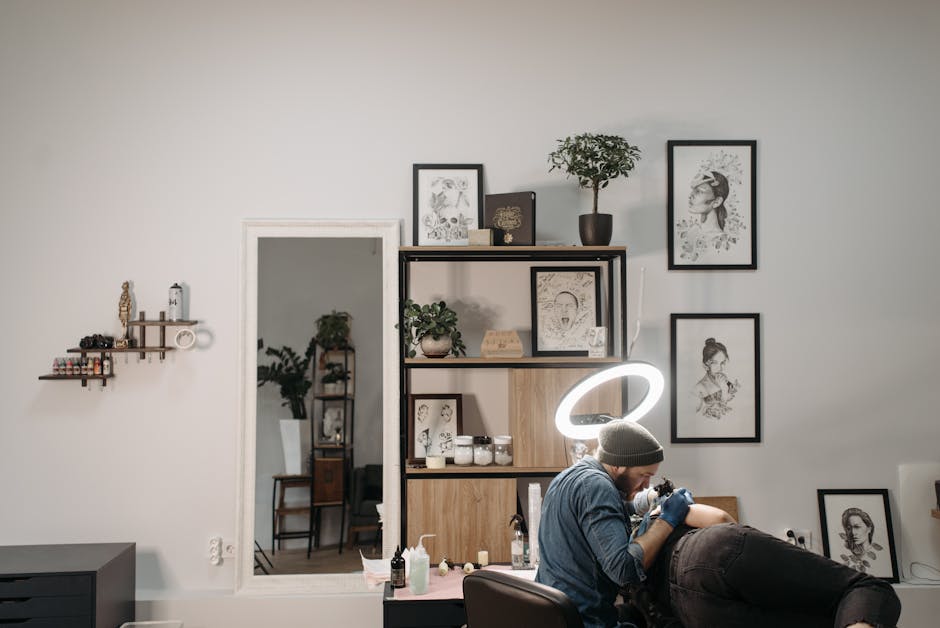
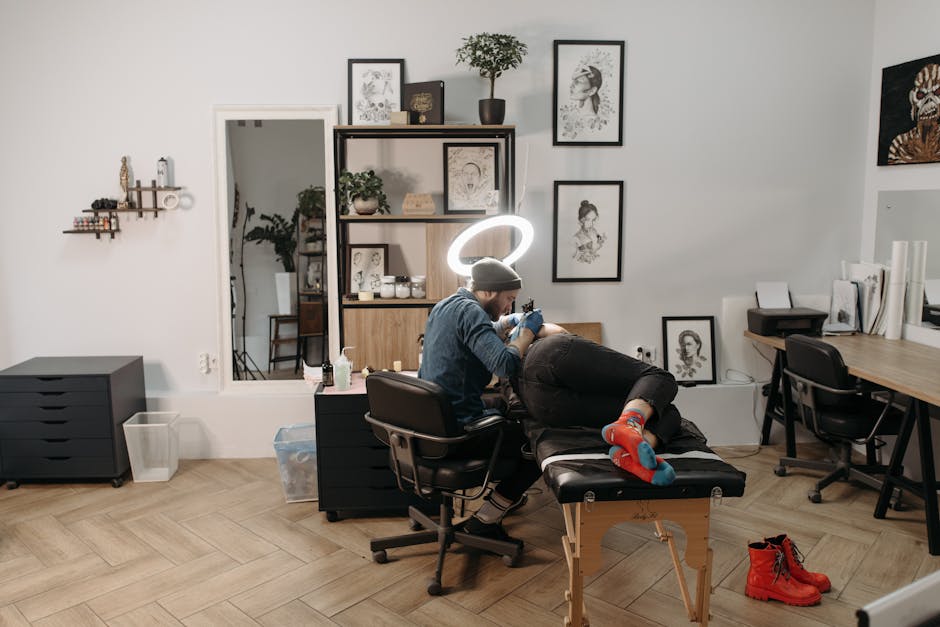
- Lighting is Everything: Invest in a good ring light. It provides even, diffused light that minimizes glare and shows true-to-life color. Avoid harsh overhead lights or direct flash, which can wash out details. Natural light from a window is also a great option.
- Clean Backgrounds: Let your work be the star. Use a solid, neutral background. A clean station, a disposable drape sheet, or even a plain wall works perfectly. No clutter.
- Multiple Angles: Take several shots. Get a straight-on shot, a few angled shots to show how it wraps on the body, and some close-ups to highlight intricate details. For piercings, show the placement from the front and side, and a close-up of the jewelry itself.
- Fresh vs. Healed: The ultimate proof of your skill is a well-healed piece. A fresh tattoo or piercing looks great, but a healed shot shows your technical application is solid and that your work stands the test of time. Make it a standard part of your process to invite clients back for a healed photo a month or two later. It’s a fantastic marketing tool and shows you care about the long-term result.
Step 2: Define and Showcase Your Niche
A portfolio that tries to be everything to everyone ends up being nothing special to anyone. The most successful artists have a recognizable style. Your portfolio is how you communicate that style to the world. Are you the go-to for American traditional? Photorealism? Fine-line botanical work? Or maybe you’re a piercer who specializes in complex, curated ear projects with high-end gold jewelry.
Organize your portfolio to reflect this. On your website or in your physical book, group similar pieces together. This creates a powerful visual flow and demonstrates your consistency and mastery within your chosen niche. If a client is looking for a black-and-grey portrait artist, they want to see a dozen incredible portraits, not one portrait mixed in with color cartoons and tribal designs.
This doesn't mean you can't show a little range, but it should be range within your brand. A realism artist can showcase portraits, animals, and nature scenes. A piercer can showcase daiths, conches, and septums, all featuring a similar jewelry aesthetic. Your portfolio should scream, "This is what I do best, and this is why you should come to me for it."
Step 3: Master Your Digital and Physical Presence
In today's market, you need to be strong on multiple fronts. A client’s journey often starts online but ends with a face-to-face consultation in your studio.
The Digital Domain
Your online portfolio is your 24/7 advertisement. Instagram is the industry standard, and you should treat your grid like a curated gallery. Use high-quality images, write thoughtful captions that describe the piece and the process, and use relevant hashtags to expand your reach. Use Reels and Stories to show your process, your studio, and your personality.
However, don't rely solely on social media. You need a professional home base that you control. This could be your own website or a polished profile on a booking platform. Having a polished online presence is key, and this is where a dedicated system really shines. For instance, with a platform like REZVA, you can integrate a beautiful gallery right alongside your services and booking calendar, making it seamless for a potential client to go from 'wow' to 'booked'. Professionals can learn more about building their brand on REZVA's page for specialists.
The Power of the Physical Book
Never underestimate the impact of a physical portfolio. When a client is in your shop for a consultation, handing them a beautifully printed, high-quality book creates a tangible, premium experience. It slows them down and allows them to truly appreciate the detail in your work in a way that scrolling on a small screen can’t replicate.
- Invest in quality: Use a professional printing service for crisp, color-accurate photos.
- Keep it pristine: Use a durable binder with protective sleeves. Wipe it down regularly. A dirty, tattered book sends the wrong message.
- Update it: Just like your digital portfolio, swap out older pieces for your new best work regularly.
Conclusion: Your Portfolio is a Living Document
Building a strong portfolio isn't a one-and-done task. It's an ongoing process of refinement that should evolve as your skills and artistic vision grow. It’s a direct reflection of your journey and your dedication to the craft. By being intentional with what you show, focusing on high-quality presentation, and showcasing your unique specialty, you create a powerful magnet for your ideal clients.
Treat your collection with the same care and artistry you put into your work on skin. Curate it, polish it, and let it proudly tell the story of the incredible artist you are. Now go create something worth showing off.
Frequently Asked Questions
How many pieces should I have in my portfolio to start out?
Focus on quality, not quantity. If you're just starting, a solid collection of 10-15 of your absolute best, technically sound pieces is far more impressive than 50 mediocre ones. It's better to have a small, killer portfolio than a large, inconsistent one. As you produce more work you're proud of, you can slowly build it out.
What if I'm an apprentice and don't have much client work to show?
Show your potential. Your portfolio can include more than just work on clients. Fill it with well-executed drawings, paintings, and high-quality flash sheets to demonstrate your artistic ability. Practice on fake skin or other mediums and photograph that work professionally. Just be sure to clearly label it as practice work to maintain transparency. This shows your dedication, style, and raw talent.
Is it okay to use filters or heavily edit my portfolio photos?
Tread very lightly here. Minor edits to correct lighting, improve contrast, or crop the image are acceptable to make the photo look as it does in real life. However, you should never use filters or edits that alter the tattoo or piercing itself. Don't smooth skin to hide redness or digitally sharpen lines. Authenticity is crucial for building trust. Your work should speak for itself.
How often should I update my portfolio?
Your portfolio is a living document. A good habit is to add new, exceptional pieces as soon as you have a great photo of them. Beyond that, schedule a full review every 3 to 6 months. During this review, be ruthless. Remove older pieces that no longer represent your current skill level or the artistic direction you're heading in. This ensures your portfolio always remains a current and accurate reflection of your best self.
This article was produced with AI assistance and reviewed by REZVA.
- tattoo artist marketing
- piercing portfolio tips
- client acquisition for artists
- professional body art portfolio
- social media for tattooists
- building a beauty brand
- client consultation techniques
Take bookings for piercing online.
Clients book themselves from your profile and a deposit covers the no-shows. Free to start, no card. Founding members get Pro free for 12 months, then their price is locked.
98
spots left of 100
12
months of Pro, free
0%
commission on bookings