Your Acrylic Application is Flawless. Is Your Business Foundation Cracked?
A full booking calendar isn't just about perfect bead pickup. Let's explore the unglamorous, non-negotiable habits that build a thriving acrylics business.
5 min read

We’ve all seen it: the impossibly crisp smile line, the perfectly structured apex, the crystal-clear encapsulation that looks like glass. That’s the work that fills our Instagram feeds and our appointment books. But as fellow professionals, you and I know the truth. A six-week waitlist isn’t built on a flawless C-curve alone. It’s built on a foundation of relentless, repetitive, and often unglamorous habits that happen long before the first client walks in and long after the last one leaves.
For over a decade, I've built my career not just on my application skills, but on the disciplined systems that support them. The glamour is in the finished set; the profit is in the process. If your technical skills are sharp but your calendar has gaps, it’s time we look beyond the brush and talk about the real work that separates a busy technician from a truly profitable one.
The Obsessive Prep and Breakdown Ritual
A client sees a clean, inviting desk. A top-tier professional sees a strategic workspace engineered for efficiency and safety. The most successful acrylic specialists I know are borderline obsessive about their setup and breakdown, and for good reason. This isn't just about hygiene; it's about mindset and momentum.
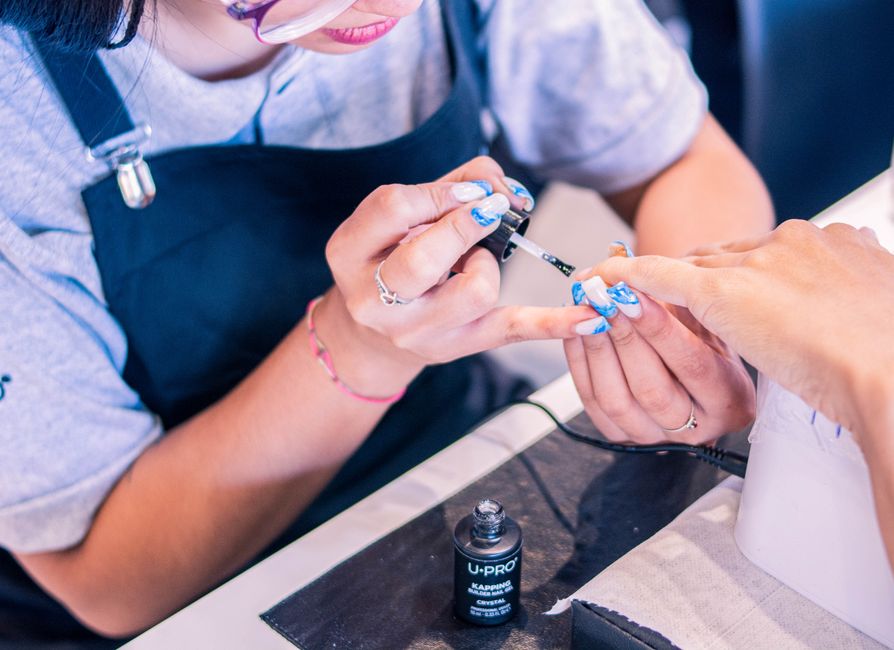
Your Morning Protocol: Before your first client, your station should be more than just wiped down. It should be fully stocked and ready for battle. This means:
- Decanting your monomer into your dappen dish. Don’t wait to do this with the client watching.
- Laying out a fresh client pack with files, buffers, and a dust brush.
- Ensuring all your e-file bits are sanitized, organized, and within arm's reach.
- Checking that your core powders (clear, cover pink, white) are full and free of contaminants.
This ten-minute ritual prevents the frantic search for a specific bit or the awkward pause to refill a product. It projects an aura of calm professionalism that clients notice, and it saves you precious minutes that add up to an extra appointment slot over the week.
The End-of-Day Shutdown: This is where discipline truly shows. It’s tempting to do a quick wipe-down and run, but that’s how you create chaos for the next day. A proper shutdown includes deep cleaning your monomer dish to prevent polymerization residue, running your e-file bits through an ultrasonic cleaner, and taking a quick inventory of what you used most that day. This isn’t just cleaning; it’s data collection for your next supply order.
The "After-Hours" Practice That No One Sees
Do you think the artists you admire just woke up one day with perfect bead consistency? Absolutely not. Their muscle memory was built during countless hours of solitary, focused practice. Client work pays the bills, but practice work builds the empire.
I still dedicate at least two hours a week to pure practice, away from the pressure of a paying client. This isn't about creating a full, Instagram-worthy set. It’s about deconstructing the skills:
- Bead Drills: Filling a sheet of paper with beads of different sizes—small, medium, large—all with the same liquid-to-powder ratio. Can you create 20 identical medium-sized beads in a row? This is the foundation of smooth, efficient application.
- Structure on a Stick: Using practice tips on a swatch stick to perfect your apex placement and C-curve without the complexity of a real hand. Can you build the perfect structure in just three beads?
- Product Testing: This is crucial. Never test a new monomer, colored acrylic, or top coat on a client. Your practice time is for discovering how a new product behaves. Is the setting time faster? Does it file differently? This knowledge prevents disasters during a service.
This off-the-clock work is what allows you to confidently handle any nail type, troubleshoot lifting issues, and shave 15 minutes off your application time without sacrificing quality. That’s where your profitability skyrockets.
Mastering the Art of Client Consultation and Record-Keeping
A new client sits at your desk. Your first question shouldn’t be “What shape do you want?” It should be, “Tell me about your lifestyle.” Are they a nurse constantly using hand sanitizer? A keyboard warrior typing all day? A gardener? The answers dictate everything from the length you recommend to the product system you choose.
This is the consultative approach that builds unwavering client loyalty. It shows you care about the longevity of their nails, not just the initial application. And the secret weapon for this? Meticulous record-keeping.
For every client, I keep a digital or physical card with notes on:
- Their "Nail Profile": Are their nail beds oily? Prone to lifting at the cuticle? Weak or strong?
- Products Used: The exact cover pink, the brand of primer, the top coat. If they have a reaction or experience lifting, you have a record to troubleshoot from.
- Service History: What did you do last time? Did you try a different shape? Did they love it or hate it?
- Personal Tidbits: Their kid’s name, their upcoming vacation, their coffee order. This turns a service into a relationship.
This habit prevents you from asking the same questions every visit, helps you predict and solve problems before they happen, and makes your client feel genuinely cared for. It’s the ultimate retention tool.
The Unsexy Side of Inventory and Financials
You can be the most talented artist in your city, but if you don’t know your numbers, you’re running a hobby, not a business. The scent of monomer can make us forget that we are service providers who need to be profitable. This requires a ruthless understanding of your costs.
Do you know your exact cost-per-service? It’s not just the price of the acrylic powder. It’s the monomer, the primer, the files (which should be single-use!), the wipes, the electricity for your e-file and lamp, and even your rent, broken down per hour. Once you calculate this, you can price your services for real profit, not just to cover costs.
This also means smart inventory management. Avoid the temptation to buy every new glitter collection. Instead, operate on a system:
- Track Your Staples: Know how many sets you get from a 32oz bottle of monomer. When you open a new one, mark the date. This data is gold.
- Set a Budget: Allocate a specific percentage of your monthly revenue for "experimental" products and stick to it.
- Review and Adjust: Look at your service menu every six months. Are your product costs going up? Your prices need to reflect that. Is your speed and skill level higher than last year? Your prices need to reflect that, too.
Curation, Not Just Creation: Your Portfolio as a Business Tool
Your social media portfolio is your single most powerful marketing tool, but too many technicians treat it like a casual photo album. Every post should have a purpose. A fully-booked specialist curates their feed to attract their ideal client and justify their premium pricing.
This means adopting the habit of becoming a part-time photographer and content strategist. Invest in a good ring light and learn basic photography principles. A clean background, proper hand posing, and cuticle oil are non-negotiable for a professional shot.
But it goes deeper. Be strategic about what you showcase. If you want to do more complex, encapsulated art, post more of it. If you’re tired of doing simple one-color overlays, stop posting them so frequently. Your portfolio tells clients what you specialize in. Use it to shape your future bookings. Platforms like REZVA are brilliant because they allow you to create a professional online presence where clients can see your curated work and book your specialized services directly, streamlining the entire process from inspiration to appointment.
Building a waitlist and a reputation as a top acrylic specialist is a marathon, not a sprint. It’s paved with these small, consistent, and often invisible disciplines. It's the meticulous cleaning, the solitary practice, the detailed notes, and the strategic posts. Master these unglamorous habits, and you won’t just be creating beautiful nails—you’ll be building a resilient, profitable, and deeply rewarding business.
Frequently Asked Questions
How much time should I realistically spend on practice each week?Focus on quality over quantity. Two hours of highly focused practice—like drilling bead consistency or perfecting smile lines on a practice sheet—is far more valuable than five hours of aimlessly creating full sets. Consistency is key. Even 30 minutes, three times a week, will compound your skills dramatically over a year.
My photos never look as good as others. What's one simple tip to improve them?Lighting and cleanup. Before you take a single photo, wipe the client's finger and the surrounding skin with an alcohol wipe to remove all dust and oil. Then, apply a drop of cuticle oil and massage it in. Use a consistent light source, like a ring light, to eliminate shadows. These two simple steps can elevate your photos from amateur to professional instantly.
I struggle with tracking my expenses. Is there an easy way to start?Start small and focus on your highest-volume products. Create a simple spreadsheet or use a notebook to track just your monomer and your most-used acrylic powders. Note the date you open a new container and the date you finish it. This will give you a clear idea of your consumption rate and a baseline for calculating your cost-per-service for your most common appointments. Once you have that habit down, you can expand to other products.
This article was produced with AI assistance and reviewed by REZVA.
- acrylic nail techniques
- salon business strategy
- nail technician habits
- client management for nail techs
- salon financial management
- nail art portfolio
- professional development for nail artists

Take bookings for nails online.
Clients book themselves from your profile and a deposit covers the no-shows. Free to start, no card. Founding members get Pro free for 12 months, then their price is locked.
98
spots left of 100
12
months of Pro, free
0%
commission on bookings