Before You Buy That LED Mask: A Smarter Way to Launch Your Facial Service
Thinking of adding skincare to your menu? I'll share my hard-won lessons on whether to invest in high-tech gadgets or master foundational techniques first.
4 min read
From Cuticles to Complexions: My Journey into Skincare
Hello, fellow professionals. It’s Valentina. For years, my world was all about the perfect arch of a gel extension and the intricate details of nail art. My books were full, my clients were loyal, and business was good. But like many of you, I saw an opportunity. My nail clients trusted me. They were already spending an hour in my chair every few weeks. The question kept nagging at me: what else could I offer them? The answer was facials.
It seemed like a natural progression. But transitioning from the precise, structured world of nails to the nuanced, biological world of skin was a bigger leap than I anticipated. I dove into esthetics training with the same passion I had for my IBD certification. The biggest question I faced right out of the gate wasn't about ingredients or protocols, but about business strategy: where should I invest my initial time and money? Do I go all-in on the impressive, high-tech machines that promise dramatic results, or do I focus on mastering the timeless, foundational power of my own two hands?
I’ve seen new estheticians and salon owners go both ways, and frankly, I wish someone had laid out the pros and cons for me back then. So, let’s break it down.
The “Tech-First” Approach: Investing in Gadgets from Day One
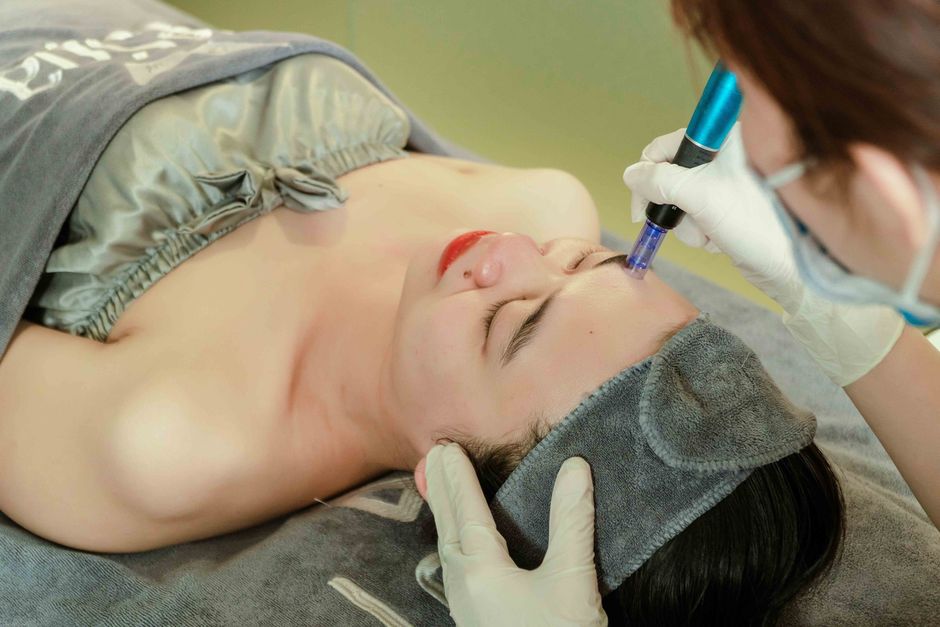
This is the siren song for many new service providers. You see the glossy marketing for a multi-function hydrodermabrasion machine or a clinical-grade LED therapy panel, and you can already picture the "Before & After" posts on your Instagram. The appeal is powerful, and there are some real advantages.
The Upside of Starting with Tech
- Perceived Value and Marketing Clout: Let's be honest, it’s easier to market a "Diamond Microdermabrasion Facial" than a "Really Good Cleansing Facial." Technology has a high perceived value. Clients often equate machines with more advanced, effective treatments and are willing to pay a premium for them.
- Higher Price Point Potential: Services that incorporate technology almost always command a higher price. You can justify charging $170 for a microcurrent facial more easily than for a purely manual one, which can help you recoup your investment faster—in theory.
- Standardized Results: A machine performs a function consistently. While the operator’s skill is still crucial, the technology provides a baseline of treatment that can feel less intimidating to a newer esthetician than relying solely on their own manual dexterity.
The Hard Truths I Learned
This is where I see so many talented professionals stumble. They finance a $9,000 machine before they have a single facial client. The pressure to pay it off is immense, leading them to push that one service on everyone, regardless of suitability.
- The One-Trick Pony Problem: What happens when a client comes in with rosacea, severe acne, or compromised skin barrier, and your expensive machine is contraindicated for them? If you haven't mastered the fundamentals, you have nothing to offer. You become a machine operator, not a skin therapist.
- The Hidden Costs: The initial purchase is just the beginning. There are consumables (special serums, disposable tips), maintenance, and often, expensive advanced training for that specific device. It all eats into your profit margin.
- Lack of Foundational Knowledge: This is the biggest pitfall. A machine is a tool, not a replacement for deep knowledge. Without a profound understanding of skin analysis, anatomy, and physiology, you can't possibly know *why* you're using a certain setting or *how* to combine it with other products for the best result. Worse, you could inadvertently cause damage.
The “Hands-On First” Approach: Mastering the Fundamentals
This is the path of the classic esthetician. It’s about building your business on a rock-solid foundation of knowledge and skill. It means your primary tools are your brain, your hands, and your carefully selected professional products. It might sound less glamorous, but from a business perspective, it’s often the shrewder move.

The Strategic Advantage of a Manual Focus
- Lower Financial Risk: Your initial investment is in quality education and a solid professional backbar of cleansers, exfoliants, masques, and serums. This is a fraction of the cost of a major piece of equipment, dramatically lowering your startup risk and financial pressure.
- Infinite Customization: When you master manual techniques, you can create a truly bespoke facial for every single person who walks through your door. You can blend custom masques, perform different massage techniques (like lymphatic drainage or acupressure), and adjust every step to what their skin needs *that day*. This level of personalization builds incredible client loyalty.
- Developing Your "Signature Touch": There is no machine that can replicate the healing, therapeutic power of human touch. Mastering facial massage isn't just about "rubbing in cream." It's about sculpting facial muscles, easing tension, and promoting lymphatic flow. This becomes your unique selling proposition—something clients can't get anywhere else.
- Building True Expertise: This approach forces you to become an exceptional skin analyst. You learn to read the skin and understand its language. This deep knowledge is the foundation upon which you can later build a technological empire, making you a far more effective and safer practitioner when you do decide to invest in tech.
The Verdict: Which Path Should You Choose?
If I could go back and advise my younger self, my advice would be unequivocal: Start with the Hands-On approach. Period.
Master your craft first. Become so confident in your ability to transform skin with your knowledge and your hands that a machine becomes an *enhancement* to your service, not the service itself. Build a clientele that trusts your expertise. Once you have a steady stream of facial clients, which is much easier when you can showcase your new services on a professional booking page like REZVA, you'll have the client data and the cash flow to make a truly informed decision about technology.
When you finally do buy a machine, it won’t be a guess. You’ll know exactly what your clients need. You might say, "So many of my clients are concerned with hyperpigmentation; an LED panel with a green light setting would be the perfect, strategic addition." You’re investing to solve a specific, known problem for your existing client base, not gambling on a machine you hope will attract new people.
This "fundamentals first, tech later" strategy minimizes risk, maximizes your skill, and builds a more sustainable, profitable, and reputable skincare business in the long run. You become the expert, and the technology becomes just one of the many tools in your expert toolkit.
Frequently Asked Questions
What are the absolute essential "hands-on" skills to master first?
Focus on the core four: 1) In-depth skin analysis (beyond just "oily" or "dry"). 2) A variety of cleansing and exfoliation techniques (enzyme, acid, physical). 3) At least two distinct facial massage modalities, such as European-style and lymphatic drainage. 4) Safe and effective extraction techniques—knowing what to extract and, more importantly, what to leave alone.
If I start hands-on, what's the first piece of tech I should invest in?
Once you're ready, I recommend starting with something versatile and with low consumable costs. A professional-grade LED therapy device is an excellent choice because it's non-invasive, has proven benefits for a wide range of conditions (acne, inflammation, anti-aging), and can be added to almost any facial. A high-frequency machine is another affordable, effective option for treating acne and promoting skin oxygenation.
How do I market a "hands-on" facial to sound as appealing as a high-tech one?
Your language is key. Don't call it a "basic facial." Frame it around the experience and the bespoke nature of the service. Use powerful, descriptive names like "The Signature Sculpting Facial," "Bespoke Skin Renewal Treatment," or "Holistic Radiance Journey." On your service menu, highlight the techniques you use, such as "includes lymphatic drainage massage" or "custom-blended enzymatic treatment." Focus on the personalized curation and the power of your expert touch—that’s a luxury no machine can replicate.
Prices are shown in US dollars, converted from euros at the European Central Bank reference rate of 16.10.2026 and rounded.
This article was produced with AI assistance and reviewed by REZVA.
- facial service launch
- esthetician business tips
- adding services to salon
- skincare treatment profitability
- facial equipment investment
- manual facial techniques
- client retention for estheticians
Take your bookings online.
Clients book themselves from your profile and a deposit covers the no-shows. Free to start, no card. Founding members get Pro free for 12 months, then their price is locked.
98
spots left of 100
12
months of Pro, free
0%
commission on bookings