Will an LED Therapy Device Actually Make You Money? A Profit Breakdown
Considering adding LED therapy? This guide breaks down the real costs, potential revenue, and ROI of handheld vs. professional panel devices for your salon.
4 min read
Is It Time to Bring LED Therapy Into Your Treatment Room?
As salon and spa owners, we’re always on the hunt for the next smart investment—that perfect service that elevates our menu, delights our clients, and, most importantly, boosts our bottom line. Lately, the buzz around LED (Light Emitting Diode) therapy is impossible to ignore. It’s all over social media, celebrity estheticians swear by it, and the technology promises everything from reduced inflammation to a collagen boost.
But let’s be honest with each other. Between equipment costs, training, and marketing, adding a new modality is a serious decision. Is LED therapy a genuine revenue-driver, or is it just another expensive piece of equipment destined to gather dust in a corner?
I’ve been down this road myself, weighing the pros and cons for my own boutique salon. So, let’s skip the marketing hype and get straight to the numbers. We’ll break down the two most common ways to introduce LED into your business—the nimble handheld device versus the premium professional panel—and figure out if this investment truly pays off.
The Case for the Portable Powerhouse: Handheld LED Devices
Think of a professional-grade handheld device as your gateway into the world of light therapy. It’s a lower-risk way to test the waters with your clientele and see if the service has legs in your market.
The Investment
This is the most attractive feature. A quality, professional handheld device (we’re not talking about the flimsy ones sold for at-home use) will typically run you between $300 and $800. You’re looking for something with proven wattage, specific wavelengths (like red for anti-aging, blue for acne), and FDA clearance for peace of mind.
The Service Model & Pricing Strategy
The beauty of a handheld device is its versatility. It’s designed to be an add-on, not a standalone star. This is its superpower. You can easily integrate it into services you already offer, maximizing your time and revenue per appointment.
- Post-Wax Soother: Use red light for 5-10 minutes after a brow or lip wax to dramatically reduce redness and calm inflammation. Clients will love leaving less flushed.
- Facial Enhancement: After extractions during a facial, use blue light on congested areas to kill acne-causing bacteria.
- During a Hair Mask: As a hair colorist, this is where I first saw the potential. While a deep conditioning mask is processing for 15 minutes, why not offer a targeted LED treatment for the face?
Because it’s a quick enhancement, you can price it as a low-friction upsell. Think $20-30 for a 10-15 minute add-on. It’s an easy “yes” for a client already in your chair.
The Profitability Breakdown
Let’s do some quick math. Assume you invest in a solid $506.39 handheld device and price the add-on at $25.32.
$506.39 (Device Cost) / $25.32 (Price Per Service) = 20 services to break even.
Twenty services. For many of us, that’s just a handful of clients a week for a single month. After you’ve sold it 20 times, every subsequent add-on is pure profit. If you get just two clients a day to say yes, you’re looking at an extra $253.19 in pure profit per week.
The Downsides
Of course, it’s not perfect. A handheld device requires your active time—someone has to hold and operate it. The treatment area is small and targeted, and it doesn’t have the same “wow” factor or immersive, relaxing experience as a larger machine. It’s an enhancement, not a destination service.
The Premium Play: Professional LED Panels & Domes
If the handheld is a tactical tool, the professional panel or dome is a strategic statement. This is for the professional who wants to establish themselves as a serious skin-care authority and create a high-ticket, standalone service.
The Investment
Prepare for a significant jump in cost. Professional-grade panels, canopies, or domes range from $1,500 to $5,000+. This is a capital expense you need to plan for. You’re paying for a larger treatment area, higher-intensity light, more robust construction, and often, more advanced features and brand recognition.
The Service Model & Pricing Strategy
With a panel, you unlock a new tier of services. The key benefit here is that it’s a passive treatment. Once the client is comfortably situated under the light, you are free for 20-30 minutes. You can use that time to clean and prep for your next client, manage your schedule, or even perform a hand and arm massage to elevate the experience further.
- Standalone LED Facials: Offer a 30-minute “Cellular Renewal” or “Acne Clearing” light therapy session. This can be priced from $70 to $100+, depending on your market.
- High-Ticket Add-On: Add a 20-minute session to any facial for a premium charge of $40-60.
- Service Packages: This is where the real money is. LED therapy delivers the best results with consistent sessions. Sell packages of 6, 8, or 12 treatments upfront. A package of 6 sessions at $75.96 each ($455.75 total) secures future revenue and guarantees a repeat client.
The Profitability Breakdown
Let’s use a mid-range panel cost of $2,531.92. We’ll price our standalone 30-minute service at $75.96.
$2,531.92 (Device Cost) / $75.96 (Price Per Service) = ~34 services to break even.
This will take longer than the handheld, but the revenue ceiling is much higher. Selling just four packages of 6 sessions ($455.75 x 4 = $1,822.99) gets you most of the way to breaking even. Once you’ve paid off the machine, a single standalone session that takes 30 minutes of largely passive time can be one of the most profitable services on your menu.
The Downsides
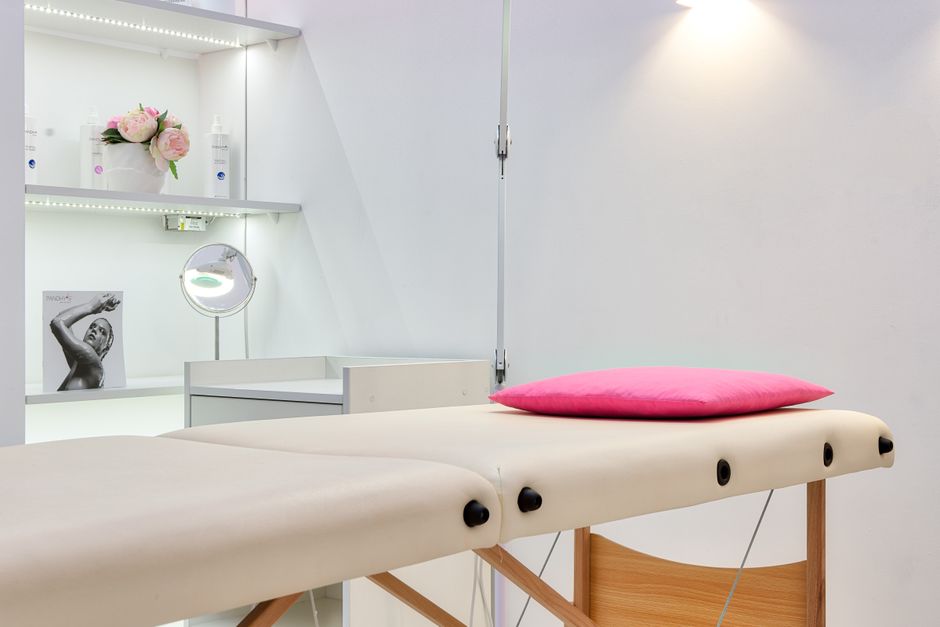
The obvious hurdle is the upfront cost. It’s a bigger financial risk. You also need dedicated space—a treatment bed in a quiet room is a must. You can’t exactly wheel a giant LED dome around a busy hair floor.
The Verdict: Which LED Device Should You Choose for Your Business?
The right choice depends entirely on your current business model, client base, and future goals.
Choose the handheld device if:
- You are a solo practitioner or have limited space.
- You want to test the demand for LED in your market with minimal financial risk.
- Your business model thrives on volume and efficient, high-value add-ons.
- You want to enhance the results and experience of your existing services (facials, waxing, hair treatments).
Choose the professional panel/dome if:
- You have a dedicated treatment room and want to build a premium, results-driven skin service.
- Your brand is positioned as high-end, clinical, or wellness-focused.
- You are confident in your ability to market and sell higher-ticket services and packages.
- You want to maximize your time by incorporating passive-income services.
In my own journey, I started with a professional handheld. It was an easy way to introduce the concept to my hair clients. The uptake was so positive that within a year, I invested in a full panel for a dedicated treatment room. This allowed me to create a tiered offering. Now, clients can get a quick $25 boost at the shampoo bowl or book a full $85 rejuvenating facial. No matter which you choose, make sure it’s easy for clients to book. A platform like REZVA gives you a booking page that is open around the clock, so clients see your services and free times and book without messaging you.
Frequently Asked Questions for Beauty Pros
How do I market a new LED service to my existing clients?
Start by talking about it! Explain the benefits during consultations. Offer a one-time introductory discount to your loyal clients to get them to try it. Post before-and-after photos (with permission!) on your social media, focusing on visible results like reduced redness or a post-treatment glow. A simple sign at your station or front desk can also work wonders.
Are there special insurance or certification requirements?
This is crucial: always check with your professional liability insurance provider before you purchase a device. Coverage can vary by state, region, and policy. While many devices don’t require a specific certification to operate, completing a manufacturer’s training program or an independent certification course is a fantastic way to build your expertise, ensure you’re using it safely, and boost client confidence.
Can I use LED therapy on hair and scalp clients?
Absolutely, and this is a huge, often-overlooked opportunity for hair stylists! Red light therapy, in particular, is known to stimulate circulation in the scalp, which can support follicle health. You can market it as a "Scalp Health Boost" or a "Healthy Hair Follicle Treatment" and offer it as an add-on while a client is getting a deep conditioning treatment or a gloss. It’s a brilliant way to merge hair care with the booming wellness trend and add another revenue stream to your service ticket.
Prices are shown in US dollars, converted from euros at the European Central Bank reference rate of 16.10.2026 and rounded.
This article was produced with AI assistance and reviewed by REZVA.
- led therapy for salons
- salon service profitability
- beauty treatment roi
- esthetician business tips
- increasing average ticket
- spa menu development
- add on service ideas
Take your bookings online.
Clients book themselves from your profile and a deposit covers the no-shows. Free to start, no card. Founding members get Pro free for 12 months, then their price is locked.
98
spots left of 100
12
months of Pro, free
0%
commission on bookings